
Conny Waters – AncientPages.com – Anyone fascinated by history recognizes a parade of rulers: some brilliant, some forgettable, and some utterly disastrous. Throughout the ages, people have longed for leaders who truly listen, yet reality rarely matches their hopes.
A new study reveals that over 1,000 years ago, divine kings of the ancient Maya introduced more collective governance, demonstrating that public opinion influenced their rule.
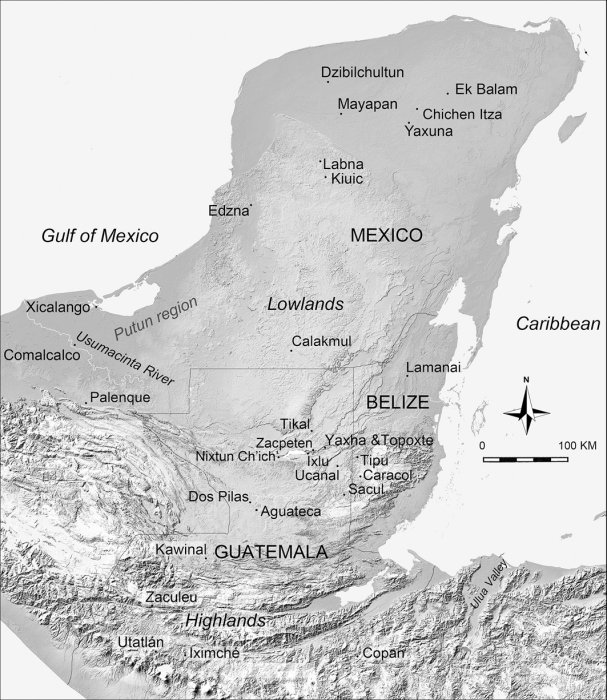
Map of the Maya area showing selected sites studied by scientists. Credit: C. Halperin, Antiquity
Excavations of a council house from the Terminal Classic period (c. AD 810–950/1000) at Ucanal, Guatemala, indicate a shift toward collaborative, consensus-based governance, while retaining elements of kingship. These colonnaded, open halls likely served as council houses where political leaders deliberated on governmental decisions. Their open design contrasts with earlier Classic period palaces, where “divine” rulers made decisions in private, highlighting the growing importance of consensus-based politics from c. 810–950 AD.
Council-Based Systems And Shared Leadership
During the Classic period (c. AD 300–810), governance in the Southern Maya Lowlands was defined by divine kingship and paramount rulers. Over time, the ideal governing system evolved, with the Postclassic period (c. AD 1000–1521) placing greater emphasis on power-sharing.
By the Late Postclassic period (c. AD 1200–1521), governments relied primarily on council-based systems, where political decisions were made through consensus and shared leadership.
“The Terminal Classic period is known as a period of tremendous political instability and crisis, with many sites in the Southern Maya Lowlands having been reduced in population,” says Dr. Christina Halperin from the University of Montreal. “How did Maya peoples rework their governing systems during this time of political instability?”
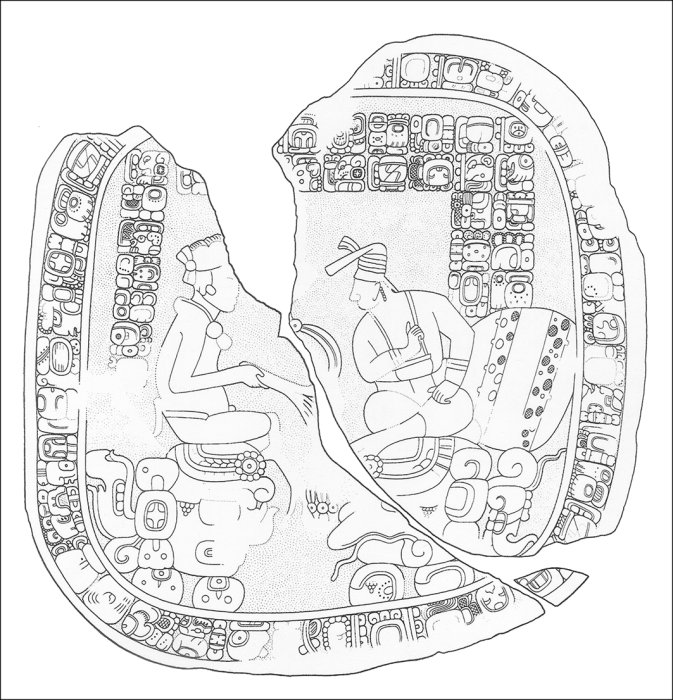
Caracol Altar 12 depicting Papmalil of K’anwitznal (left) seated facing Caracol ruler, K’inich Toobil Yopaat (right), AD 820. Credit: drawing by N. Grube.
Several scholars argue that council houses date back to at least the Late Classic period, with most examples found in northern Yucatan. Political systems in this region placed less emphasis on divine kingship during and after the Classic period, as evidenced by fewer stelae dedicated to rulers and fewer elaborate tombs of supreme leaders within temple-pyramid complexes.
Ancient Maya Kings Needed The Support Of The People To Keep Their Power
Dr. Halperin and colleagues excavated a Terminal Classic civic building at Ucanal, Guatemala, as part of the Proyecto Arqueológico Ucanal.
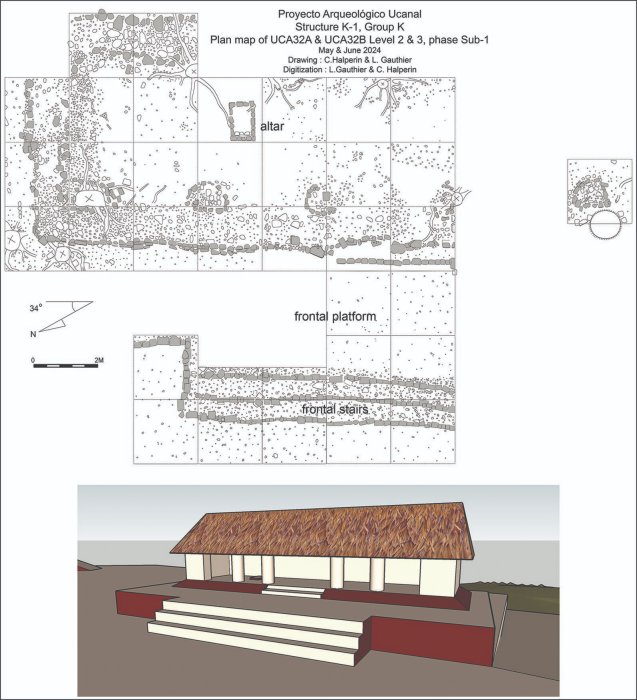
Plan of excavations of the Terminal Classic Ucanal Structure K-1, Sub-1, and a 3D sketchup reconstruction of the structure (plan by L. Gauthier & C. Halperin; reconstruction by M. Voltaire). Credit: Antiquity (2026). https://doi.org/10.15184/aqy.2026.10329
The results of the study reveal that the colonnaded open hall was likely an early council house, where political leaders such as kings, nobles, and lineage heads met to deliberate accords, discuss war, adjudicate crimes, and prepare for feasts, weddings, and dances.
The building’s open design made meetings visible to the public. This theatrical display of government also underscores the importance of public participation in politics during this period.
This contrasts with the Classic period, when political decisions occurred in enclosed, segmented palaces that emphasized the hierarchy between the king and the royal court.
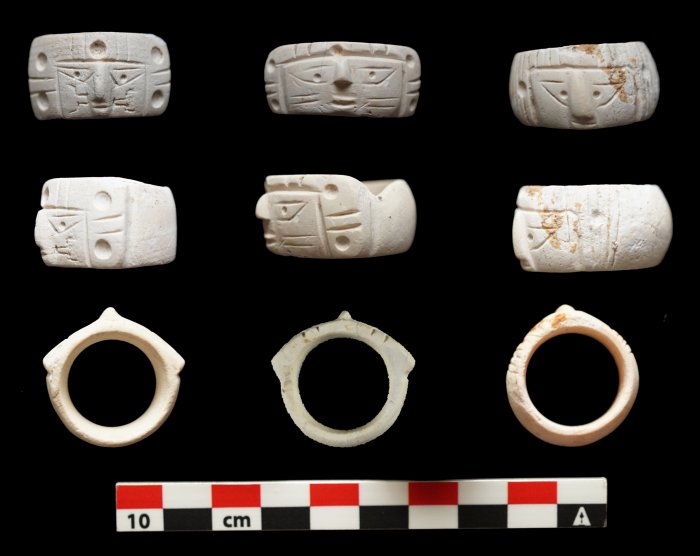
Terminal Classic period marine shell rings from Ucanal, UCMM-075, -076, -77. Credit: Christina Halperin, Université de Montréal
“Another feature of the new civic-ceremonial architecture was that they were located in large public plazas,” adds Dr. Halperin. “Because their facades were open, the interior activities in these buildings could be seen by anyone in the plaza spaces. Governance had become, in a sense, more transparent.”
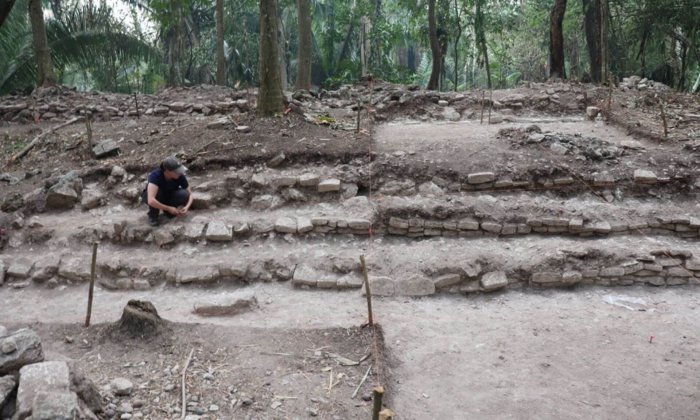
Excavations of Ucanal Structure K-1, a possible Terminal Classic council house. Credit: Christina Halperin, Université de Montréal
Dating indicates that this building was constructed when Papmalil became ruler of Ucanal. During his reign and those of his successors in the Terminal Classic period, new public buildings and water infrastructure were built in Ucanal, particularly benefiting non-elite residents.
This suggests the public not only participated in politics as spectators and witnesses, but also influenced elite decisions. Public consensus became important for maintaining power.
The emergence of colonnaded open halls in the Terminal Classic period suggests these buildings supported a more cooperative government, greater civic engagement, and increased influence of ordinary people in Maya politics.
“Ancient Maya societies did not collapse but reworked their institutions and political arrangements,” Dr. Halperin concludes. “One of these reinventions was an effort to counter the weight of paramount kings and create more consensus-based governing systems.”
See also: More Archaeology News
“The recently excavated open hall from Ucanal, Structure K-1, provides an early example of this new public building form, which would later become an essential component of Postclassic Maya political centres across the Maya Lowlands and Highlands. While the institutions of Maya kingship continued into the Postclassic and Colonial periods, Maya peoples actively reworked their political systems and built new public building forms that fostered collaboration and consensus,” the researchers conclude in their study.
The study was published in the journal Antiquity
Written by Conny Waters – AncientPages.com Staff Writer