
Conny Waters – AncientPages.com – A rare Anglo-Saxon die stamp found near Lynsted, Kent, may alter our understanding of the origins of some of Britain’s most significant archaeological treasures.
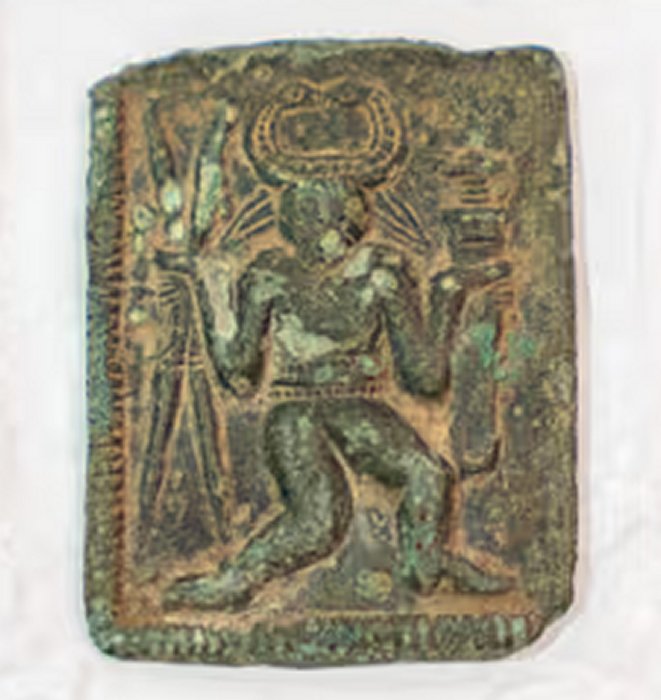
The small copper-alloy object, discovered by metal detectorist Stephen Newbury, dates to the late sixth or early seventh century. Experts believe it was used to produce decorative metal foils for high-status military equipment, including helmets.
Credit: Kent County Council
Analysis by Kent County Council and the British Museum indicates the die closely matches the size and design of panels on the Sutton Hoo helmet. It is the only confirmed example of its kind found in Britain.
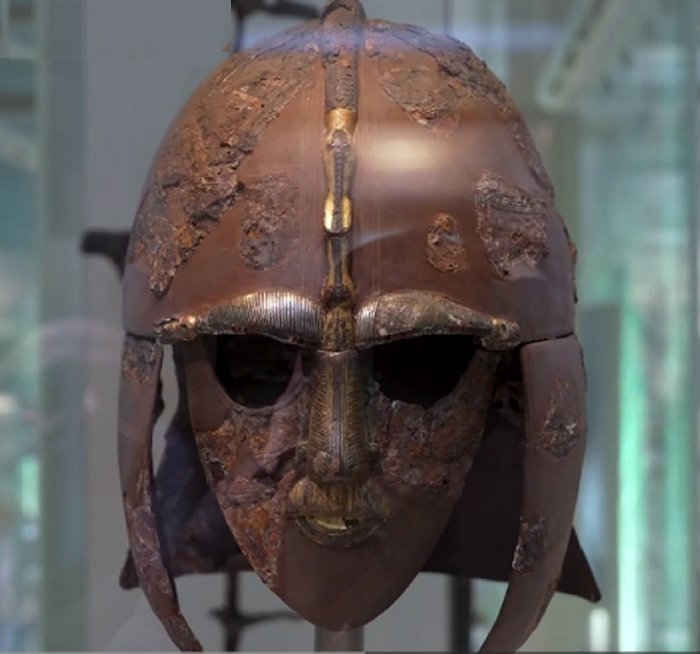
The Sutton Hoo helmet, discovered in 1939 during the Sutton Hoo ship-burial excavation, dates to around 620–625 AD. Widely associated with King Rædwald of East Anglia, it features elaborate decoration that suggests it may have served as both armor and a ceremonial crown.
Often called the “British Tutankhamen,” the helmet is an iconic symbol of the Early Middle Ages, archaeology, and England. The helmet’s origin has been debated for decades. Its motifs of mounted warriors initially led researchers to believe it came from Uppland, Sweden. However, recent discoveries suggest otherwise.
As previously reported by AncientPages, the discovery of a stamp from Tåsinge suggests the Sutton Hoo helmet may have been made in Denmark, potentially rewriting early European history. A new find in Kent now offers further insight into these intriguing helmets.
Credit: Kent County Council
This finding suggests that helmets once believed to be imported from Scandinavia may have been produced in England.
A coroner has officially declared the discovery of Treasure, recognizing its significant historical importance.
“This is an exciting discovery for Kent, strengthening our reputation as a county with a rich and internationally significant heritage.
Credit: Kent County Council
Our county has played a vital role throughout history, and this is another piece of evidence showing Kent’s importance in the story of early England, as a place of craftsmanship, culture, and international connections.
Finds like this help tell the story of our past, connect people with the remarkable heritage on their doorstep, and show why it is so important that we continue to protect and celebrate our historic environment,” Jamie Henderson, Cabinet Member for Environment, Coastal Regeneration and Public Health, said.
See also: More Archaeology News
“We’re grateful to the finder for sharing this fantastic discovery with the Portable Antiquities Scheme for recording, which allowed Dr. Andrew Richardson to recognize its significance and ensure it was reported under the Treasure Act. This will enable it to be acquired by a museum and preserved in public ownership for the benefit of everyone,” Ian Richardson, Acting Head of Portable Antiquities and Treasure at The British Museum, said.
It is hoped the object will be acquired and displayed locally at the Beaney House of Art and Knowledge in Canterbury.
Source: Kent County Council
Written by Conny Waters – AncientPages.com Staff Writer