
(RNS) — Richard Smallwood, a singer and pianist best known for his contemporary gospel music hit “Total Praise,” died Tuesday (Dec. 30).
Smallwood was 77. He died of complications of kidney failure at a rehabilitation and nursing center in Sandy Spring, Maryland, his publicist announced.
Nominated eight times for a Grammy Award, the Stellar and Dove awardee was known for combining Black gospel and classical genres of music.
His ubiquitous song “Total Praise,” introduced with his group Vision in 1996, was later covered in the group Destiny’s Child’s a capella “Gospel Medley,” performed by a cantor at New York’s Carnegie Hall and sung by a choir when President Barack Obama welcomed Pope Francis to the White House.
“When you write a particular piece, you have no idea what’s going to become of it — will people like it, or will people sing it?” he told Religion News Service in a 2024 interview when he was honored at the Kennedy Center. “And so, to see the years of people embracing it really means a lot to me as a composer. It means a lot that something I wrote can make a difference in people’s lives.”
His “I Love the Lord” was featured in a remake on the 1996 “The Preacher’s Wife” soundtrack by Whitney Houston and the Georgia Mass Choir. Other hits, recorded with The Richard Smallwood Singers and, later, Vision, included “Center of My Joy,” “I’ll Trust You,” and “Anthem of Praise.”

RELATED: Richard Smallwood, ‘Total Praise’ composer, to receive Juneteeth tribute in D.C.
The Atlanta native was mostly raised in Washington by his mother, Mabel, who used to take him to hear the National Symphony Orchestra, and his stepfather, the Rev. Chester Lee “CL” Smallwood, who pastored Union Temple Baptist Church in Washington’s southeast quadrant. The young Smallwood started playing piano by ear by age 5 and was taught in high school by singer-pianist Roberta Flack. Before founding the Richard Smallwood Singers in 1977, he was a founding member of Howard University’s Gospel Choir.
Smallwood was among the singers in the all-star choir that sang a new version of “Hallelujah” conducted by musician Quincy Jones on the 1992 album “Handel’s Messiah — A Soulful Celebration.”
Smallwood’s “Center of My Joy” was co-written with Bill and Gloria Gaither and introduced Smallwood to the white Christian community, publicist Bill Carpenter said. That song, first performed with The Richard Smallwood Singers, became the group’s most popular hit.
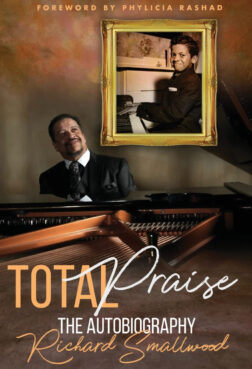
He recorded “Journey: Live in New York” in 2007 and his final album, “Anthology Live,” in 2015. He published the book “Total Praise: The Autobiography” in 2019.
In the book and in interviews, he spoke of being diagnosed with depression.
“Music just tends to turn off the craziness, if you will, and brings a light of love and a feeling of peace,” he told RNS in the interview in 2024.
“Most of my music that I’ve done has come from personal situations from my life, things I’ve gone through, things that I’ve written about, things that I’m feeling, things that I’ve tried to convey to other people who may be hurting. Music has the tendency to heal hurt, and it certainly has healed mine in a lot of ways.”
Smallwood’s death sparked accolades in musical, political and civil rights circles.
Saxophonist Kirk Whalum played the notes of the start of the chorus of “Total Praise” in a video on Instagram.
“What a giant,” added Whalum. “Do you think maybe the angels in heaven will be singing that song ‘Total Praise’? I think they’re already tuning up. Be well, my brother, in the new Jerusalem.”
“Richard Smallwood was a musical genius and giant of a figure in the church and the gospel music world,” Sen. Raphael Warnock, senior pastor of Atlanta’s Ebenezer Baptist Church, posted on X. “He was an inspiration to all who encountered his music. His songs got us through tough times, dark and difficult days. No grave can silence his voice. The melodies linger and the faith lives on!”
Sherrilyn Ifill, a civil rights lawyer and former president of the NAACP Legal Defense and Educational Fund, added on Bluesky: “They will call him a gospel music artist. He was that. But Smallwood was also one of the greatest composers, period, of any modern music form. My heart is heavy. A great musical legend has left us.”
Smallwood, who had been a music minister at D.C.’s Metropolitan Baptist Church, credited a range of artists for influencing his blend of musical genres, from classical composer Johann Sebastian Bach to the Roberta Martin Singers of the mid-20th century to gospel composers Edwin and Walter Hawkins.
“I think any music that preaches Jesus and him crucified is a kind of music that is appropriate in the church setting,” he told RNS.
RELATED: NEWS FEATURE: Looking for ways to bridge the gap in religious music tastes