
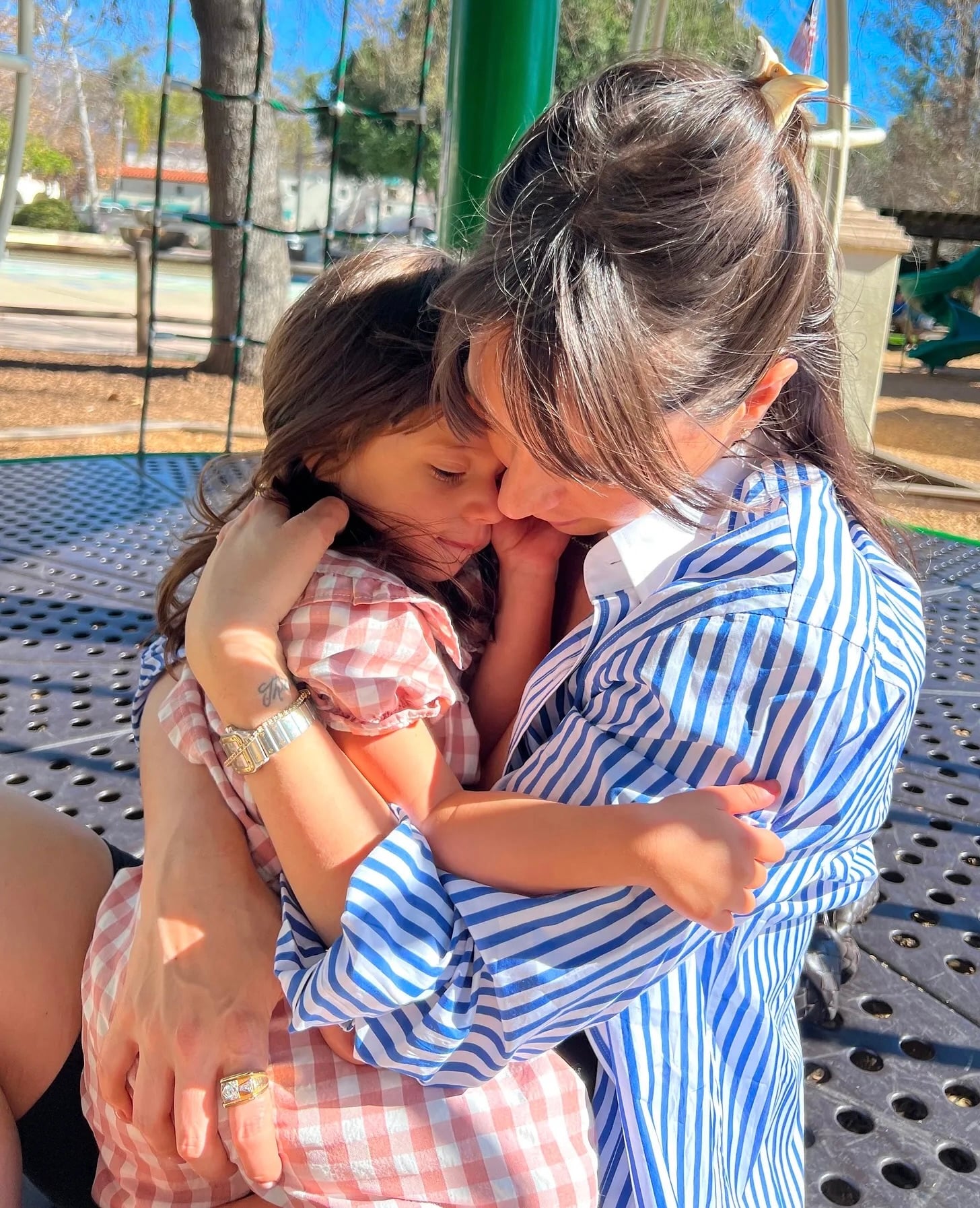
I wish you could see my face right now. There’s a lost, stoic stare I do everything in my power to avoid wearing. I don’t love the “Oh my god, how do you do it all” thing, but I have to be honest: The last three years have been about survival.
My husband Davide and I tried for more than a year to conceive. I weathered a miscarriage, and the grief that followed, then kept moving. A fertility doctor told us we wouldn’t be able to get pregnant on our own, but then, just before beginning IVF, the miracle happened.
When Carmela was born, we were on another level of joy. She was a happy, social baby. She made eye contact and laughed. But I started noticing some physical delays. At six months, she couldn’t hold her own bottle, and I could see that other babies were stronger. She couldn’t hold herself up on a slide. But she seemed on track in every other way, so I filed the thought away.
The real panic began around one year, and was in full swing by 18 months. That’s the age when children who aren’t meeting certain milestones — like walking or standing — qualify for government intervention programs. Carmela wasn’t even pulling to stand.
I tried to stay calm, telling myself what everyone else was saying: “Crawling for a long time is great for development!” But it was becoming obvious that something was off. What I didn’t realize was that this was the first in a lifetime of experiences of her being different. The stares. My awkward, fumbling excuses. The way I had to decompress after every social situation, processing what had just happened, while acting like nothing had.
We found a new pediatrician — a warm, careful woman who also happened to have a neurodivergent child. She sat with Carmela for 45 minutes, then looked at me and said, “Your daughter hasn’t made eye contact with me this entire time. She’s not physically where she needs to be.” She urged us to start immediate intervention at our regional center.
We began the long, bureaucratic process, which required a patience I had to build on the spot. While waiting, I found a physical therapist in town, who turned out to be exactly what Carmela needed. It took six more months, but she eventually learned to walk. I also dove into research and finally understood the thing no one, frankly, had the guts to tell me: The brain controls the body, and if those two things aren’t communicating properly, you’re not just dealing with physical delays, but neurological ones. I took Carmela to a neurologist, who ran genetic tests. The result came back quickly: Carmela had the SCN2A variant, which causes autism, hypotonia, and a range of other conditions.
I processed all of this privately — the appointments, the paperwork, the physical therapy runs across town — all the while trying to show up at dinner parties, and answer the question: “How’s being a mom?” I would break into a strange, nervous mumble about how she was doing great but there were delays and there was this mutation, and we weren’t really sure what it all meant. I was a mess. I didn’t have the language for anything yet.
Davide was heartbroken in a different way. At first, he kept repeating: There’s nothing wrong with her. She’s perfect. And she was. But at the park one day, I pointed out to him all the things she couldn’t physically do. We broke down. I explained that the earlier we intervened, the better off she’d be.
We got Carmela’s official diagnosis at two. Your daughter has autism. After the doctor’s appointment, we got into our car, and my husband and I just wailed. Minutes later, Carmela started wailing — she knew, as she always does. My darling girl, so far away, yet deeply connected. In that moment, I realized how critical it was for me to control my emotions and feelings around her, no matter how valid they were.
It’s been almost three years since her diagnosis. A blur of appointments, daily therapies, getting into preschool, needing to switch preschools, and the endless search for specialists, programs, and TikTok posts that might give me one more answer. I’ve gotten good at getting lost in the doing. The more I push forward, the more appointments she has, the more I feel like we’re laying a path to help her. That’s what keeps me sane.
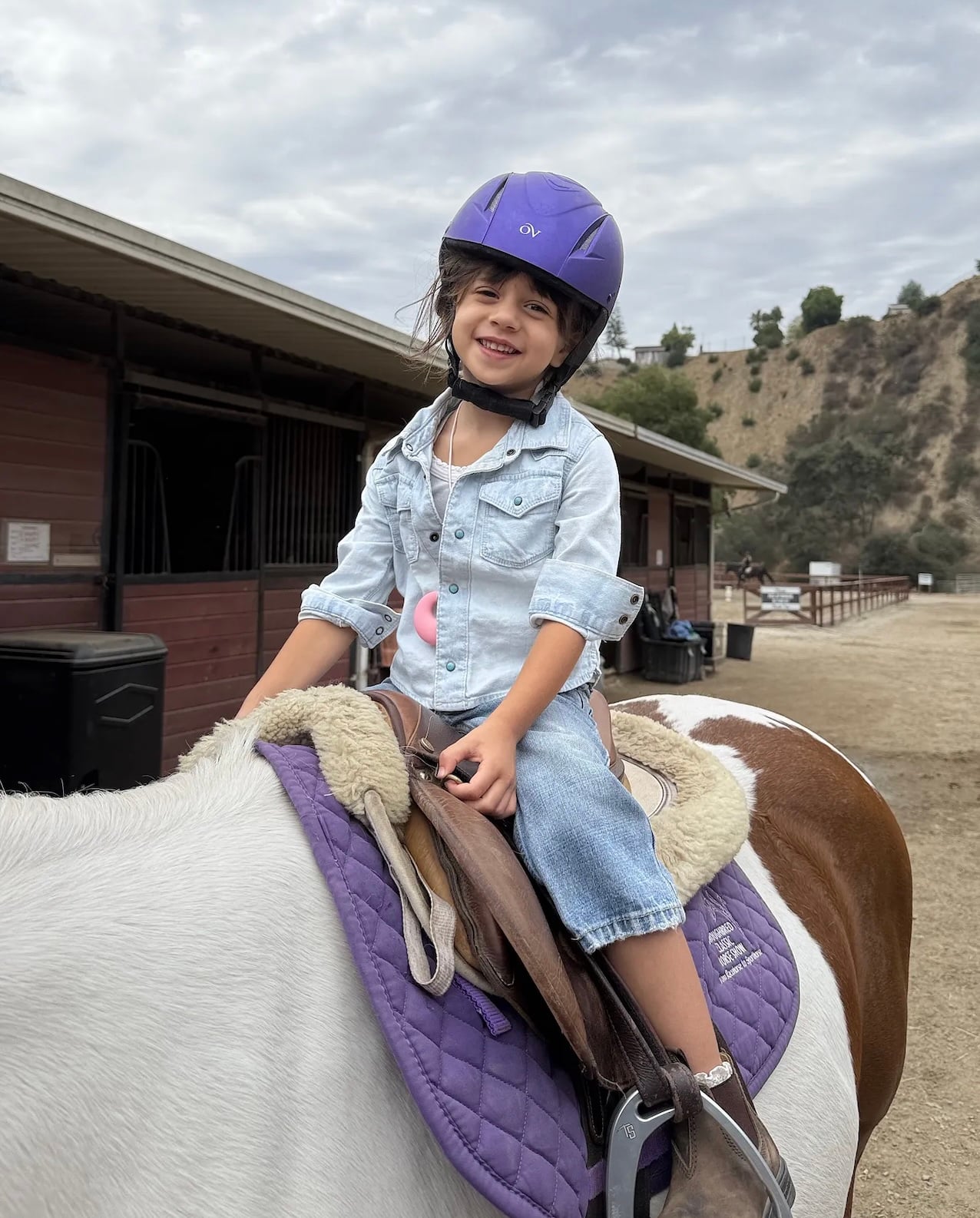
There are people who believe autism shouldn’t be fixed; that these children are born exactly as they should be. I agree with that — I’m not trying to change my daughter’s frequency or dull her magic. Her brain should be studied for its beauty. But she cannot tell me she needs to go to the bathroom. She can’t tell me she’s hungry, thirsty, or in pain. She can’t communicate her needs, and I can see the exhaustion and frustration in her eyes. It comes out as aggression, regression, sleep disruption, and brain fog. That is not joy. That is suffering. I’m not trying to ‘fix’ her. I’m trying to give her tools to navigate the world, because I won’t be with her forever. And she deserves to exist in this life without me having to translate and navigate every moment for her.
I’m aware of how lucky I am. I’m crying as I write this because so many parents are living through unsurvivable things, and I have a healthy, beautiful child right in front of me. But multiple things can be true at once, and it is hard that she’s almost five and has never said “Mommy.” She has no sense of danger and will run into traffic if I let go of her hand. She’ll put a knife in her mouth; she’ll swallow rocks. Her younger brother, Carlo, will follow me and answer when I call him. Carmela is lightyears from that. Every single day of my life, I am ON.
The juxtaposition of Carmela and Carlo is something I don’t have words for. There’s no way to describe the experience of parenting one neurotypical child and one neurodivergent one. But I will say there are moments where I almost feel angry about everything Carlo can do. Not at him, never at him, but at the distance between what comes so easily to him and costs Carmela everything. He loves her. He pines for her. He washes her hair, knocks her over with hugs. She tolerates him — mostly pushes him away. When Carmela locks eyes with you, you feel as if you’re the only person in the world. But having a son who is so affectionate and a daughter who can’t hug is just…an experience.
Our private world and the real world are two different places, and I live in both of them simultaneously. At home, we sing and dance and do our thing, and then we enter the real world and it’s “why won’t she talk,” or I’m sending emails to entire classrooms explaining that she won’t hurt anyone, or I’m screaming her name at the pool while another parent jumps in to pull her out.
That’s where the mourning comes in. Every parent has to release some version of the life they imagined, but, for me, it sometimes feels like everything: Ballet. Cooking together. Painting. Movies. Talking to each other. Every dream I had for us, and for her, I’ve had to grieve, quietly, without a funeral. Carmela is one of the most magnificent creatures I have ever known. But the work of reaching her, of gently pulling her into a world not built for her, is slow.
I am over the moon just being around her. I am gutted. I am living a life full of genuine joy, and then I’ll be alone in my car and, out of nowhere, I’ll scream. There’s a constant chorus of people saying, “She’s going to be great. It’ll be fine.” And there’s the possibility that this is her, and always will be. That I may never have a real conversation with my daughter. I am learning, slowly and imperfectly, to hold that truth without falling apart. Some days I can. Some days I can’t. The fear lives alongside the acceptance, and always will. On the day I die, my final thought will be: What happens to her when I’m gone?
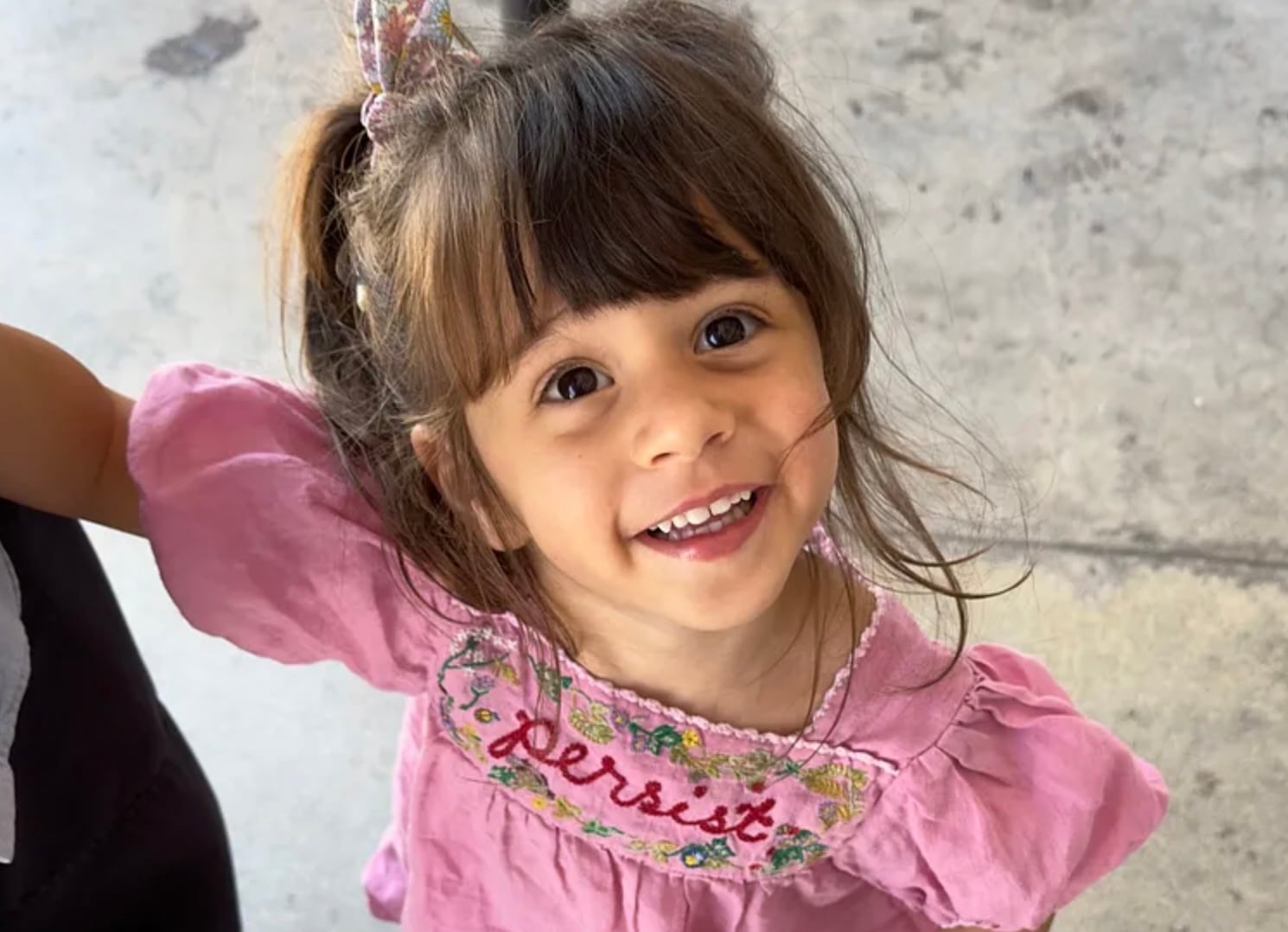
This is autism awareness month. This is what I want you to be aware of.
Pia Baroncini is the creative director of LPA and co-host of the podcast Everything is the Best. You can follow her on Substack, if you’d like.
P.S. What disability taught me about parenting, and what it feels like to have autism.
(Photos courtesy of Pia Baroncini. This post first appeared on Pia Baroncini’s newsletter; this essay, which has been edited/condensed for length, is being published here with Pia’s permission.)